
Groundwater-fed Softener-water Profile (GSP)
Scope:
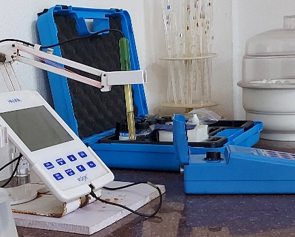
Physical & Sensory Parameters:
Colour (Appearance & True Colour Units), Odour, Turbidity,
pH, Electrical Conductivity (EC) &
Total Dissolved Solids (TDS) by gravimetry (TDSG).
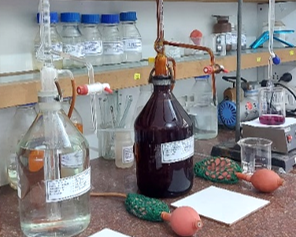
Chemical Parameters:
Alkalinity (P, Total & Bicarbonate), Hardness, Calcium (Ca) & Magnesium (Mg); Ammoniacal-Nitrogen (NH3-N), Nitrite (NO2) & Nitrate (NO3); Fluoride, Boron,
Chloride, Sulfate, Iron (Fe), Manganese (Mn), Sodium, & Potassium.
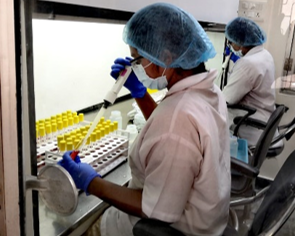
Bacteriological Parameters:
Detection of Total coliforms & E. coli in 100 ml; by
Membrane Filtration & Chromogenic agar plating (MFC),
Or Enzyme Substrate Autoanalysis (ESA).
Total parameters: 6 + 15 + 2 = 23 + 1 (Computed)
Rationale:
Groundwater is a vital source of domestic water, providing a naturally filtered and reliable supply. Many apartment complexes, independent houses, villas and farm houses in and around Hyderabad rely on groundwater to supplement metro water supply. For some, groundwater may be the only source of water. One of the constraints in utilisation of groundwater is hardness of water. Hardness is not a health problem as such. But very hard water affects general usability. Water distribution pipes, hot water geysers, home appliances would be vulnerable to scaling. Excessive water hardness primarily causes aesthetic problems related to white mineral deposits, soap scum, faded laundry, and dull skin or hair. mineral scaling, equipment damage, and reduced energy efficiency.
Temporary hardness is mostly caused by dissolved calcium or magensium bicarbonate (which is removed by boiling). Permanent hardness is mostly due to dissolved calcium / magensium sulfate (which is not removed by boiling). Ion-exchange resins can soften both temporary and permanent hard water.
Most whole-house (point-of-entry) water softeners remove calcium and magnesium through ion exchange. Hard water flows through a chamber (mineral tank) filled with negatively charged synthetic polymer (resin) beads. The negatively charged resin beads come with loosely held positively charged sodium ions. When hard water passes through the mineral tank, positively charged hardness minerals (Ca & Mg) stick to the beads, releasing sodium ions. Thus, the level of hardness minerals reduces and sodium increases in softener treated water.
When resin beads in the mineral tank become full of hardness minerals, the unit has to be flushed again with a brine solution to regenerate the ion-exchange beads. A water meter tracks how much feed water has passed through the mineral tank, before starting a flush. Older models may use a timer to schedule regeneration cycles. The regeneration process creates salty wastewater (brine discharge) that flushes out into a drain or septic system.
The actual performance of a water softener unit depends on the size of its mineral tank (grain capacity), as well as the regularity and efficiency of the regeneration cycle. The softened water contains a small amount of extra sodium, which is usually safe to drink unless a person is on a strict low-sodium diet. Households with anyone on a strict low-sodium diet can change the salt in the brine tank from sodium to potassium chloride, which is slightly more expensive.
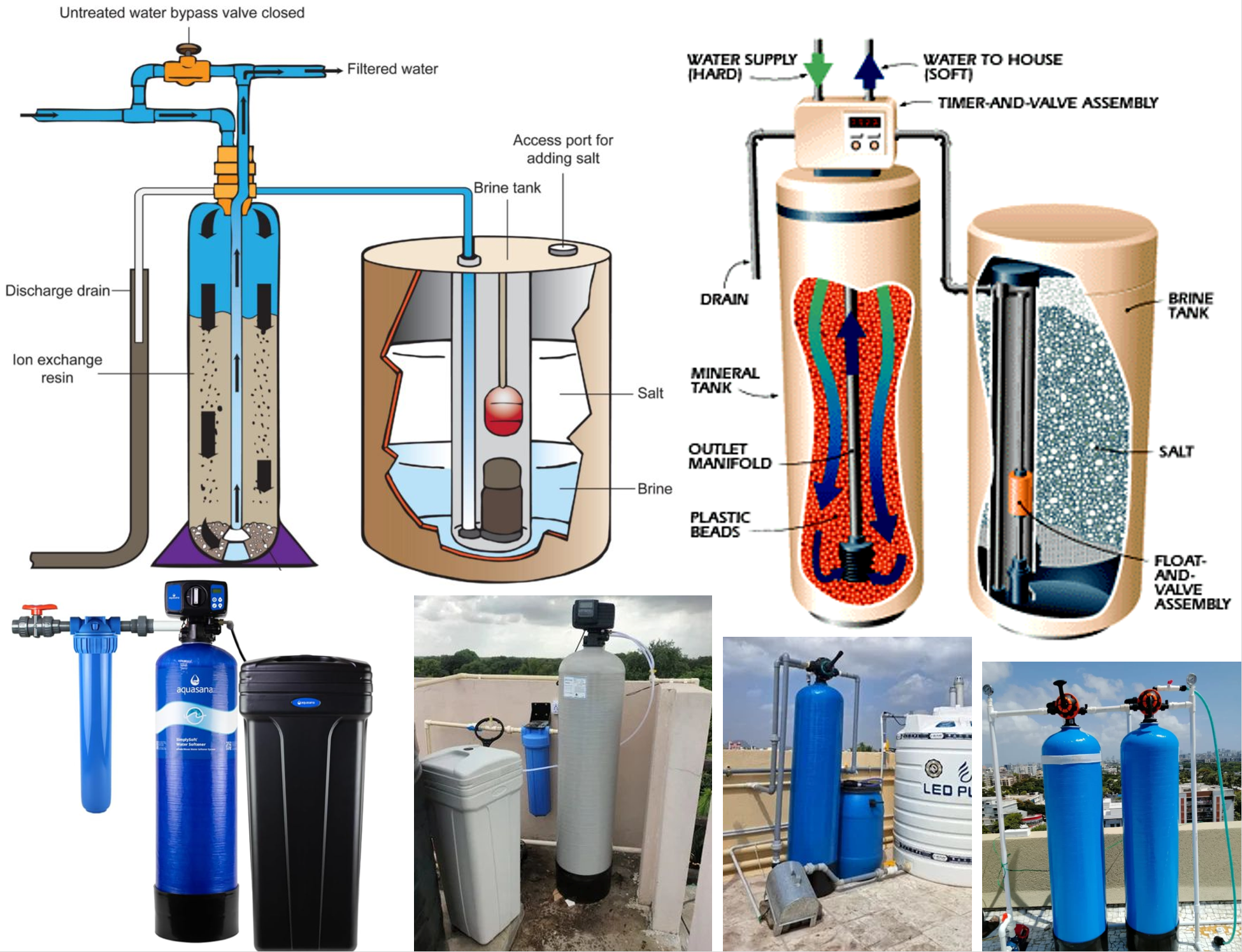
Raw water from the source borewell should be tested to select the appropriate model and size of a softener unit. Levels of hardness, iron, and manganese are key inputs for sizing water softeners. While softener units can handle excessive hardness, there is a limit to their capacity to deal with iron and manganese. Water softener systems can adequately treat dissolved (ferrous) iron in concentrations up to 3 mg/L, and manganese up to 0.5 mg/L, provided the borewell water is fed directly into the softener unit without prior exposure to air. Air exposure oxidizes and precipitates iron as ferric rust, and manganese into a solid, blackish-brown manganese dioxide powder. These solids stick to the resin beads and fill the tiny spaces between them, clogging the softener bed. Other raw water parameters should also be tested depending on the intended use: for example, microbial safety is critical for domestic applications, physical and sensory parameters are important for aesthetic reasons, and alkalinity-hardness interactions that affect the stability of water and performance of household appliances.
For proper functioning of a water softener, inputting the adjusted hardness value of the raw (feed) water is essential. Adjusted hardness is calculated by testing the source borewell water for hardness, iron and manganese, using the following industry formula:
Adjusted Hardness = Hardness + (4 × Iron) + (4 × Manganese), with all values measured in mg/L or ppm.
Modern demand-initiated water softeners use this adjusted value to calculate exactly when the resin bed is exhausted and needs to recharge. If this value is not set at the time of installation, the system will fall back to its factory default setting—typically between 250 and 350 mg/L, depending on the make and model. If the raw water hardness is higher than the default, the resin bed will saturate long before a recharge cycle is triggered. During this period, hard water will break through the resin bed and the hardness of the treated water will be the same as that of the raw water. Conversely, if the raw water’s hardness is lower than the default setting, the system will recharge more often than is necessary. This results in excessive salt consumption, wasted water, and reduced life of the softener resin.
While inputting raw water hardness is critical, inputting the number of people in a household enables the softener system controller to estimate demand, calculate reserve capacity and schedule recharge for a reliable supply of softened water.
To customize target water hardness, softeners utilize manual or electronically controlled blending valves. Adjusting a manual valve requires a trial-and-error process, where multiple water samples must be tested during installation. In contrast, electronic valves feature a digital controller that automatically calculates the blend ratio and adjusts the valve, typically requiring only a single hardness test to verify accuracy.
A properly sized ion-exchange softener unit substantially removes calcium and magnesium (hardness minerals) and replaces them with sodium. Ideally, the treated water's mineral profile should be compared to the raw water's to verify that the unit is working properly. However, even a standalone test of the treated water provides valuable insights by confirming whether the hardness minerals have been successfully removed.
The Groundwater-Fed Softened Water Profile (GSP) combines physical, chemical, and bacteriological testing to evaluate the performance of your point-of-entry (POE) whole-house water softener. This analysis verifies softener efficiency, water safety, and suitability for daily domestic use. Hardness, calcium, magnesium, iron, and manganese levels are measured to assess system performance. Sodium and potassium track the ion-exchange process, while ammoniacal nitrogen, nitrite, nitrate, fluoride, and sulfate levels—along with microbiological parameters—ensure the water is safe and potable.
This package can also be used to test untreated borewell water to determine its suitability for softener treatment and to provide a baseline for evaluating softener performance.
Go TopSample - Collection, Storage & Transportation:
Indian Standard (IS) 17614 (Part 1) of 2021 provides guidance on the design of sampling programs and sampling techniques. IS 17614 (Part 5) of 2021 provides guidance on sampling of drinking water from treatment works and piped distribution systems. IS1622:1981 provides sampling guidance for bacteriological tests. Sample should be representative of the water to be tested and should be collected with utmost care to ensure that no contamination occurs at the time of collection or prior to examination by the laboratory.
Step-1: Gather all that you need for collection of water sample:
One litre sample collected in a clean and dry clear or amber colour polypropylene bottle (CBWS/ABWS) is required for physical and chemical tests. About 250 ml of water sample collected in a sterile bottle with thiosulfate (SBT) is required for bacteriological tests. You need a pair of sample collection bottles (1xCBWS + 1xSBT), two black or dark colour polythene bags (small garbage bag will do) to minimise exposure of samples to sunlight, ice packs to keep the sample bottles cool during transport and a carry bag for convenient transport.
Both CBWS and CBSF/SBTD are available from the IHS Laboratory. If it is not feasible for you to collect the specified sample collection bottles from the laboratory and you must collect samples, freshly emptied packaged drinking water bottles or new PET bottles may be used, in that order. If only one freshly emptied packaged water bottle is available, then use the same to collect bacteriological sample. Caution! Do not use empty beverage bottles such as ThumsUp, Maaza, Sprite. Nutrients and other residues in such bottles may promote growth of bacteria and bias test results.
Step-2: Identify sampling point:
To evaluate the performance of a water softener, samples should be collected from two distinct locations: before and after treatment. Raw Water (Inlet): Collect the sample from a tap located immediately before the water enters the softener unit. This establishes the baseline hardness of your source water. Softened Water (Outlet): Collect the sample from a tap located directly after the softener unit but before it enters any storage tanks. If sampling from a tap located immediately after the softener unit is not feasible, collect a sample from an accessible tap located downstream on the softener water distribution system. Note that intermediate storages of softened water and distribution system can distort, to some extent, the functional evaluation of the softener due to accumulation of sediment and/or leaching of minerals from storage tanks. These possibilities should be taken into consideration for interpretation of test results.
Step-3: Collect sample:
- Wash both your hands with soap and water, wipe with a clean towel and let it dry. Request an assistant to wash his/her hands and standby.
- Label the sample collection bottles and place it within easy reach, but do not open at this stage. Have ice packs ready.
- Flush the delivery pipe by letting water out for, say 2-3 minutes. Do not touch the flow from delivery pipe. Ask the assistant to operate handpump or draw water from open well and pour for sample collection by you.
- Collect the sample for physical and chemical analysis first; followed by collection of bacteriological-sample.
- Hold the bottle in one hand. Open and hold the cap in the other hand, avoiding touching the inner side of the cap. Collect the sample by placing the opened bottle under the flow from the tap. When the bottle is almost full, quickly remove it from the water stream and replace the cap tightly. Wipe the outside of the bottle dry with a clean, dry tissue or cloth.
- Place each bottle inside separate dark colour bags, tie ice packs around each of them and place it in a carry bag for transport to laboratory.
Step-4: Transport to laboratory:
Transport samples to laboratory as soon as possible, preferably within six hours. If you have multiple errands in the same trip, plan to first deposit sample at the laboratory & continue with others.
Step-5 Store sample, if required:
If immediate transport is not feasible, store the sample inside the regular chamber (not the freezer compartment) of a refrigerator until you are ready to transport it to the Laboratory, and definitely within 24 hours from the time of collection.
Go TopInformation About Source, Context, Intended Use & Concerns:
Information regarding the location, age, depth, and pump capacity of the raw water borewell is essential for accurately interpreting test results. Providing GPS coordinates and photos of the borewell location, softener unit, and sampling point is highly recommended. Please specify the exact location of the sampling point relative to the softener unit (i.e., whether it is before or after treatment). Indicate if the raw borewell water is pumped directly through the softener or routed through intermediate storage (such as a sump or overhead tank) first. Additionally, please outline the intended use of the water, your primary reasons for testing, and any specific concerns or doubts. This context greatly aids our analysis. If necessary, the IHS Laboratory may contact you for further clarifications or details regarding the water source and its surrounding environment.
Test Method & Duration:
Physical and chemical characteristics of water sample are tested according appropriate parts of the IS3025 and/or American Public Health Association (APHA). For bacteriological analysis methods specified in IS 1622 of 1981 are used. Report will be available in 3 to 5 days, depending on duration of bacteriological analysis and gathering of additional information, if any is required.

To pick up sample collection bottle and/or schedule collection of samples: Email: ihslab@ihs.org.in with your address and contact telephone; OR WhatsApp: +919848011251; Or Call: 23211013/4.
References:
- IS10500. 2012. Indian Standard Drinking Water Specification. 2nd Rev., . New Delhi: Bureau of Indian Standard (BIS); 2012 May, RA 2023, Amd 4.
- IS17614 (art 1), 2021. Water Quality – Sampling. Part 1 Guidance on the Design of Sampling Programs and Sampling Techniques. New Delhi: BIS.
- IS 1622: 1981, RA2019. Indian Standard Methods of Sampling and Microbiological Examination of Water. New Delhi: Bureau of Indian Standard (BIS); Indian Standard, IS1622 - 1981, Rev. 2003, RA 2019.
- APHA. 2023. Standard Methods for the Examination of Water and Wastewater, 24th Edition. Washington, DC: American Public Health Association (APHA), American Water Works Association (AWWA), and Water Environment Federation; 2023. https://www.standardmethods.org/
- IS 3025 Relevant Parts: 1983. Methods of Sampling and Test (Physical and Chemical) for Water and Wastewater. Parts, 4, 10, 21,46 etc. New Delhi: Bureau of Indian Standard (BIS); Indian Standard. https://standards.bis.gov.in/website/know-your-standards
- IS2800 of 2019, Amalgamation of IS 2800 Part 1 & 2. Code of Practice for Construction and Testing of Tube wells/Borewells. New Delhi: Bureau of Indian Standard (BIS), 2019.
- IS:11189-1985 Methods of Tube well development, New Delhi: Bureau of Indian Standard (BIS); 1985 Reaffirmed 1999; https://law.resource.org/pub/in/bis/S08/is.11189.1985.pdf
- WHO. 2022. Guidelines for drinking-water quality. 4th Edition, 1st & 2nd addenda. Geneva: 2022. https://www.who.int/publications/i/item/9789240045064
- WQA, 2023. White Paper on Cation Exchange Softened Water and Corrosion. Lisle, IL USA: Water Quality Association; https://wqa.org/wp-content/uploads/2023/05/2023_WaterSoftenersAndCorrosion.pdf.
- USEPA, 2026. Soften Water without Wasting It. Guide to Selecting and Maintaining a Water-Efficient Water Softener. EPA Watersense, United States Environmental Protection Agency, 2026. https://www.epa.gov/watersense/cation-exchange-water-softeners.